| English
In Netherlands, people transform tractors to work in vegetable farms
They are converted to a tricycle format to distribute the footprint across the width of the tractor and minimize soil compaction.
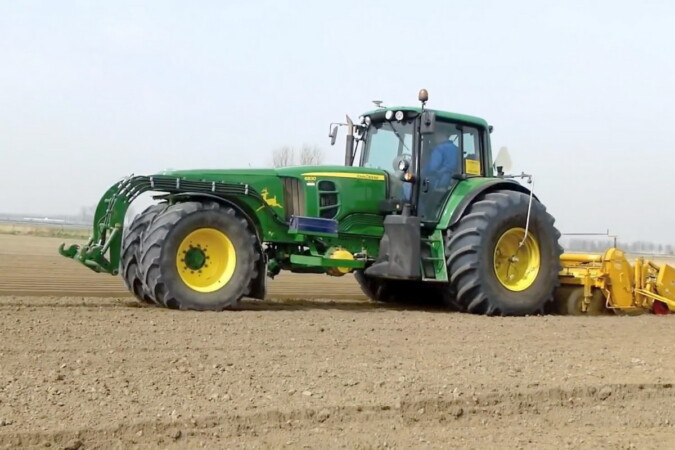
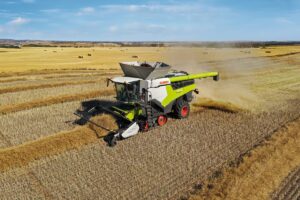
In Netherlands, often vegetable producers use tractors with chassis reconfigured to a tricycle format to prevent over-compaction of the soil in the same footprint.
The innovation’s goal is to distribute the footprint across the width of the tractor, by placing the front wheels within the rear axle track.
A Dutch engineering company presented an adaptation of conventional tractors, with a narrow directional front axle and an extended chassis at the front.
By doing that, the workability and the weight distribution are improved.
In the case of vegetable farms, the reconfiguration boosts the germination of seeds and the harvesting of crops, especially when working in very light soils.
INQUIRIES