EN 09/04/2026 | INDUSTRY ANALYSIS
Who Really Owns the Tractor You Bought?
Software, data, diagnostics and updates are becoming an increasingly important part of agricultural machinery. The Right to Repair debate raises a deeper question: What does it mean to own a machine in the digital age?
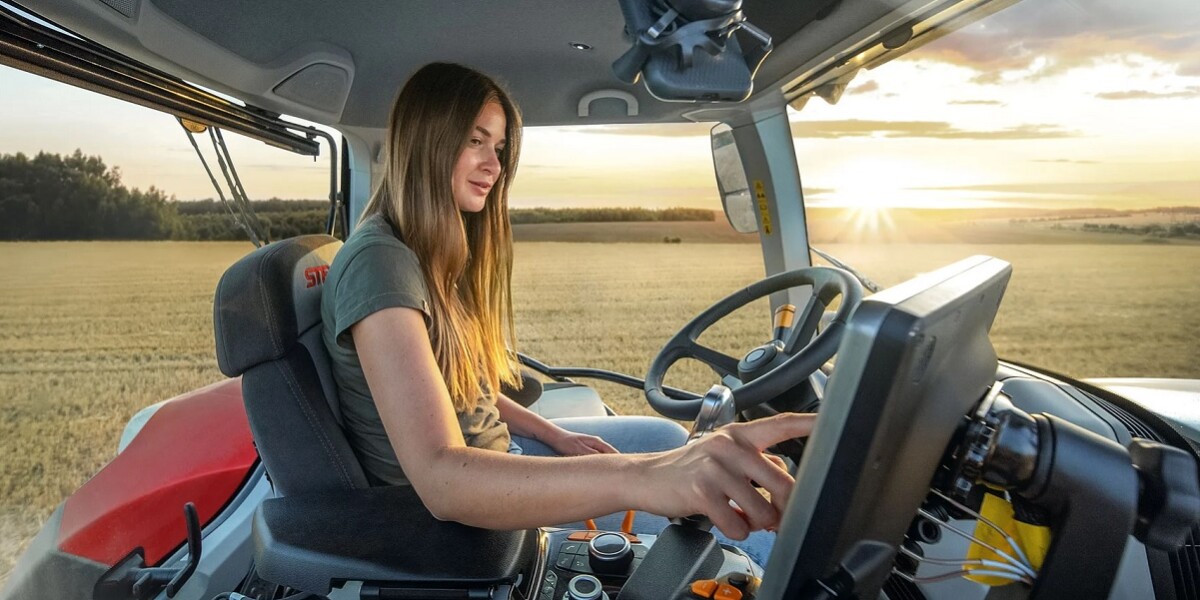
For more than a century, buying agricultural machinery meant something relatively simple.
A farmer paid for a tractor, combine or sprayer, and that machine became part of the farm’s assets.
The owner could use it, sell it, repair it and decide who would maintain it.
Digitalization has not eliminated that concept of ownership. But it has started to make it more complex.
A modern machine is no longer made up only of engines, transmissions, hydraulic systems and mechanical components.
It also contains software, electronic control units, sensors, connectivity systems, data, digital diagnostics and functions that may depend on external platforms.
The farmer still owns the machine.
The question is how much control the owner has over everything that allows that machine to operate.
SIGNALS
Repairing a machine can now require working with its software: electronic components may need diagnosis, programming or digital pairing after replacement.
Access to these tools is beginning to open up: agreements and regulations are expanding repair options beyond authorized dealer networks.
Machines also produce data: a connected machine can record and transmit dozens or even hundreds of variables during operation.
Users are gaining rights over that information: the European Data Act allows access to and, under certain conditions, sharing of data generated by connected machines.
The relationship continues after the sale: diagnostics, updates, connectivity and digital services can remain active throughout the machine’s lifetime.
When Replacing a Part Is No Longer Enough
For decades, many agricultural machinery repairs depended primarily on mechanical knowledge, tools and the availability of replacement parts.
That is changing too.
In a modern machine, certain electronic components may need to be identified, programmed or digitally paired with the rest of the equipment after they are replaced.
The problem arises when the tools required to perform those operations are available only within the manufacturer’s technology ecosystem.
Much of the debate surrounding the so-called Right to Repair has developed around this boundary.
In July 2026, the U.S. Federal Trade Commission (FTC) reached a settlement with John Deere requiring the company, for 10 years, to provide certain repair resources to farmers and independent repair shops on terms equivalent to those available to its authorized dealers.
Those tools allow users to perform operations such as reading and clearing fault codes, programming electronic components and accessing technical information required for certain repairs.
The Deere case is important.
But the phenomenon is much broader.
An Industry-Wide Debate
Manufacturers have also begun establishing voluntary agreements with farmer organizations.
The American Farm Bureau Federation has Right to Repair agreements with John Deere, CNH, AGCO, Kubota and CLAAS.
According to the organization, those manufacturers account for approximately three-quarters of the agricultural machinery sold in the United States.
The issue, therefore, can no longer be considered an isolated conflict between one company and its customers.
It is a consequence of the increasing digitalization of machinery.
The more functions depend on software, the more important it becomes to determine who can access the tools required to work on them.
Repair Does Not Mean Modifying Everything
The debate also has another side.
Manufacturers argue that unrestricted access to certain technological capabilities can create concerns related to safety, emissions, cybersecurity and intellectual property.
The distinction matters.
Repairing a machine to restore it to normal operating condition is not necessarily the same as modifying its software to change power output, emissions systems or safety devices.
Regulators are increasingly attempting to distinguish between the two.
In February 2026, the U.S. Environmental Protection Agency (EPA) clarified that emissions regulations do not prevent manufacturers from providing tools or software needed to perform legitimate repairs.
But that does not mean every modification is permitted.
The boundary between repair and modification is therefore becoming a new technological and regulatory issue for the industry.
The Tractor Also Produces Data
Digitalization introduces another, even deeper dimension.
Machines no longer simply perform work.
They also produce information.
A connected agricultural machine can record location, speed, fuel consumption, temperatures, pressure, torque, hydraulic performance, electrical status and numerous parameters related to its operation.
John Deere reports that, depending on model and configuration, a connected machine covered by European legislation can collect between 50 and 200 variables.
Some of that information can be transmitted through JDLink to digital platforms such as John Deere Operations Center.
The physical tractor remains in the field.
But part of its digital activity continues beyond it.
Europe Opens Another Frontier
That is precisely why the ownership debate is beginning to extend far beyond repair.
Since September 2025, the European Union’s Data Act has established rights regarding access to and use of data generated by connected products.
The legislation explicitly includes agricultural and industrial machinery.
The principle introduces an important change.
Data generated by a machine does not necessarily have to remain locked inside its manufacturer’s digital ecosystem.
Users can access that data and, under certain conditions, share it with third parties.
This could create new opportunities for maintenance, agronomic analysis, fleet management and independent service development.
It also raises another question.
If a machine continuously generates value through data, who controls that value after the machine has been sold?
More Dependence, but Also More Capability
There is a paradox.
The same technology that can increase dependence on the manufacturer’s ecosystem also enables services that were previously impossible.
Remote diagnostic systems can identify faults without requiring a technician to initially travel to the machine.
Connectivity can make it possible to analyze error codes, prepare replacement parts before a service visit and even solve certain problems through remote software updates.
Data analysis can also help anticipate failures and reduce downtime.
For a farmer operating within a critical planting or harvesting window, those capabilities can have significant economic value.
The debate, therefore, is not simply about freedom versus control.
It is also about different ways of organizing an increasingly complex technology ecosystem.
A Machine That Continues After the Sale
For much of the history of agricultural machinery, the economic relationship between manufacturer and product was heavily concentrated around the initial machine sale, replacement parts and technical service.
Software extends that relationship.
Diagnostics, connectivity, updates, data, digital services and new functionality can accompany a machine for years.
That can also change the business of dealers, independent repair shops and technology providers.
The machine is no longer simply a finished product leaving a factory.
It is progressively becoming a platform that can continue evolving throughout its operating life.
Market Context
The Right to Repair debate may be one of the first visible manifestations of this transformation.
The United States is debating which tools farmers and independent repairers need to maintain modern equipment.
Europe is already regulating who can access and use data generated by connected machines.
They are different debates, but they emerge from the same structural change.
Agricultural machinery increasingly combines physical components with software, data and digital services.
And those layers do not necessarily follow the same rules of ownership.
Outlook
Farmers will continue buying tractors, combines and other machines.
But defining exactly what they are buying may become increasingly complex.
The physical machine has an owner.
Software may be protected by licenses and intellectual property rights. Data may be subject to specific access and usage rights. And certain functions may depend on digital platforms, diagnostic tools or external services.
The Right to Repair debate may be only the beginning.
Over the coming years, manufacturers, farmers, dealers, independent repairers and regulators will have to define where the manufacturer’s technological control ends and the owner’s rights begin.
Because the central question may no longer be simply who owns the machine.
It may be who controls the different layers of value that continue operating after the machine has been sold.
INDUSTRY ANALYSIS
- Can Any Tractor Become Autonomous?
- Why Aren’t Machinery Prices Falling If the Market Is in Crisis?
- Why Are Major Machinery Manufacturers Redefining Their Businesses?
- Is China Reshaping the Balance of Power in Global Agricultural Machinery?
- What’s Really Behind the Global Agricultural Machinery Downturn?

⊕ Tractors
⊕ Combines
⊕ Sprayers
⊕ Forage Harvesters
⊕ Grain Carts
⊕ Mixer Wagons
⊕ Mowers
⊕ Air Carts
⊕ Drapers
MAQUINAC INTERNATIONAL
International coverage of the global agricultural machinery industry.



© Maquinac.
Maquinac is the leading Spanish-language media platform dedicated to the agricultural machinery industry, with more than 20,000 articles covering manufacturers, products, markets, and industry trends.
The No. 1 Agricultural Machinery Portal in Spanish